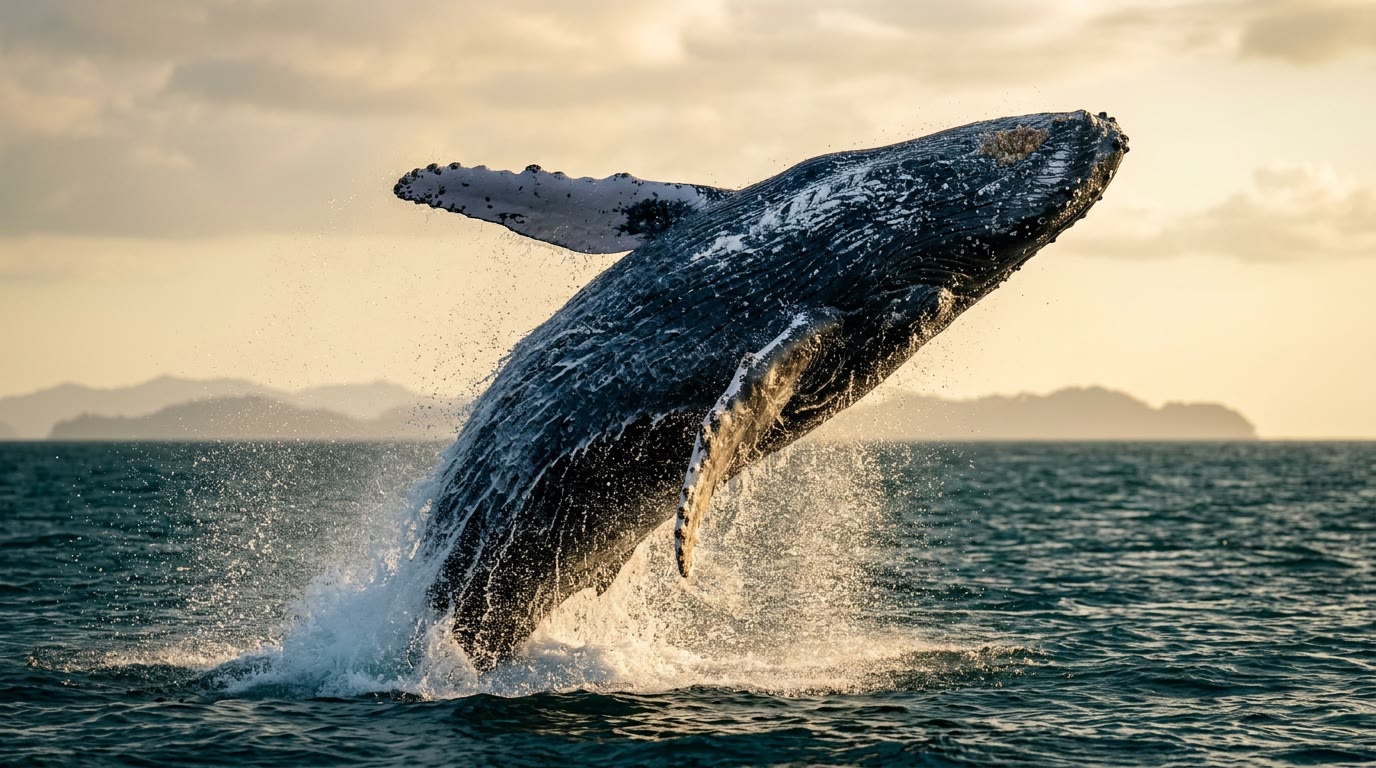
Why Panama and not somewhere else
The Gulf of Panama is one of very few places on the planet where two separate humpback whale populations meet. The southern group comes up from Antarctica and Patagonia between July and October. The northern group comes down from California and Alaska between December and March. Same animal, two opposite migrations, one gulf where both stop.
They come for the same reason: warm, shallow, protected water to calve and raise their young. That is why the best window, and the one we run most consistently, is July through October, when numbers peak and mothers with calves are around.
What you actually see
Worth saying plainly: these are wild animals and nobody can guarantee you a breach. What is common in season:
- Blows and backs at distance, which is how almost every sighting starts.
- Fluke lifts as the animal dives, the classic photograph.
- Mothers with calves moving slowly through shallow water around the Pearl Islands.
- Full breaches, the most spectacular and the least predictable.
- Dolphins, turtles and seabirds, which show up almost every trip even when the whales do not perform.
How it is done properly
Responsible watching is not a brochure detail, it decides whether the animal stays or leaves. On our trips we approach from the side, never head on and never from behind, hold the minimum distance Panamanian rules require, cut or reduce engine when an animal comes closer on its own, never chase mothers with calves, and cap the time spent with any one group of whales.
If a boat promises to get you closer than anyone else, it is promising to break the rule that protects both the animal and you.
How to shape the day
- Half day. Early departure, search the most active water and back by late morning.
- Full day with the Pearl Islands. Whale watching in the morning, anchor at an island to swim and eat, run back in the afternoon. This is the one we recommend most: if the whales do not show, the day still stands on its own.
- Whales and fishing. A fishing session on the run out can be added.
What to bring
Sunscreen, a cap, polarized sunglasses (they help enormously to see through the glare), a light layer for the wind and a camera with a charged battery. If you get seasick easily, take something the night before: the open gulf moves more than the bay.
Outside the season
From November to June the odds drop sharply and we do not sell this trip as a whale watch. If you are visiting in those months the right route is fishing the Pearl Islands or the Panama Bay charter, and if a whale turns up, all the better.
What makes this route special
- One of the few places on earth where northern and southern humpbacks both gather
- Peak season July through October in the Gulf of Panama
- Private trip, no crowded boats and no group timetable
- Mothers with calves in shallow water around the Pearl Islands
- Dolphins, turtles and seabirds on the same run
- Can be combined with an island stop or fishing
What is included
- Professional captain and crew
- Fuel for the agreed route
- Ice, cooler and bottled water
- Dock fees
- Life jackets and safety equipment
- Binoculars on board
Not included
- Food and alcoholic drinks
- On-board grill or catering (quoted separately)
- Crew gratuity
- Any sighting guarantee: these are wild animals
Questions about this route
How much is the whale watching tour?
1,300 dollars for a private full day, up to 8 guests, with captain, crew, fuel, ice and water included.
When is the best time to see whales in Panama?
July through October. In those months southern hemisphere humpbacks reach the Gulf of Panama to calve and raise their young, and that is when you see mothers with calves.
Do you guarantee we will see whales?
No, and be wary of anyone who does: these are wild animals. What we control is reading the water and spending the day in the right zones. That is why the full day includes an island stop: if the whales do not show, the day still stands on its own.
How close do you get to the whales?
We always hold the minimum distance Panamanian rules require, approach from the side and never chase mothers with calves. If an animal comes closer on its own, we cut or reduce engine.
Is the trip rough?
The open gulf moves more than the bay. If you get seasick easily, take something the night before.